Initial control
Oral hygiene guidance and control of risk factors, together with professional removal of plaque and calculus.
Caring for your gums protects the support of your teeth.
Diagnosis, inflammation control and follow-up: planning based on each patient’s periodontal condition.
Book a periodontal assessment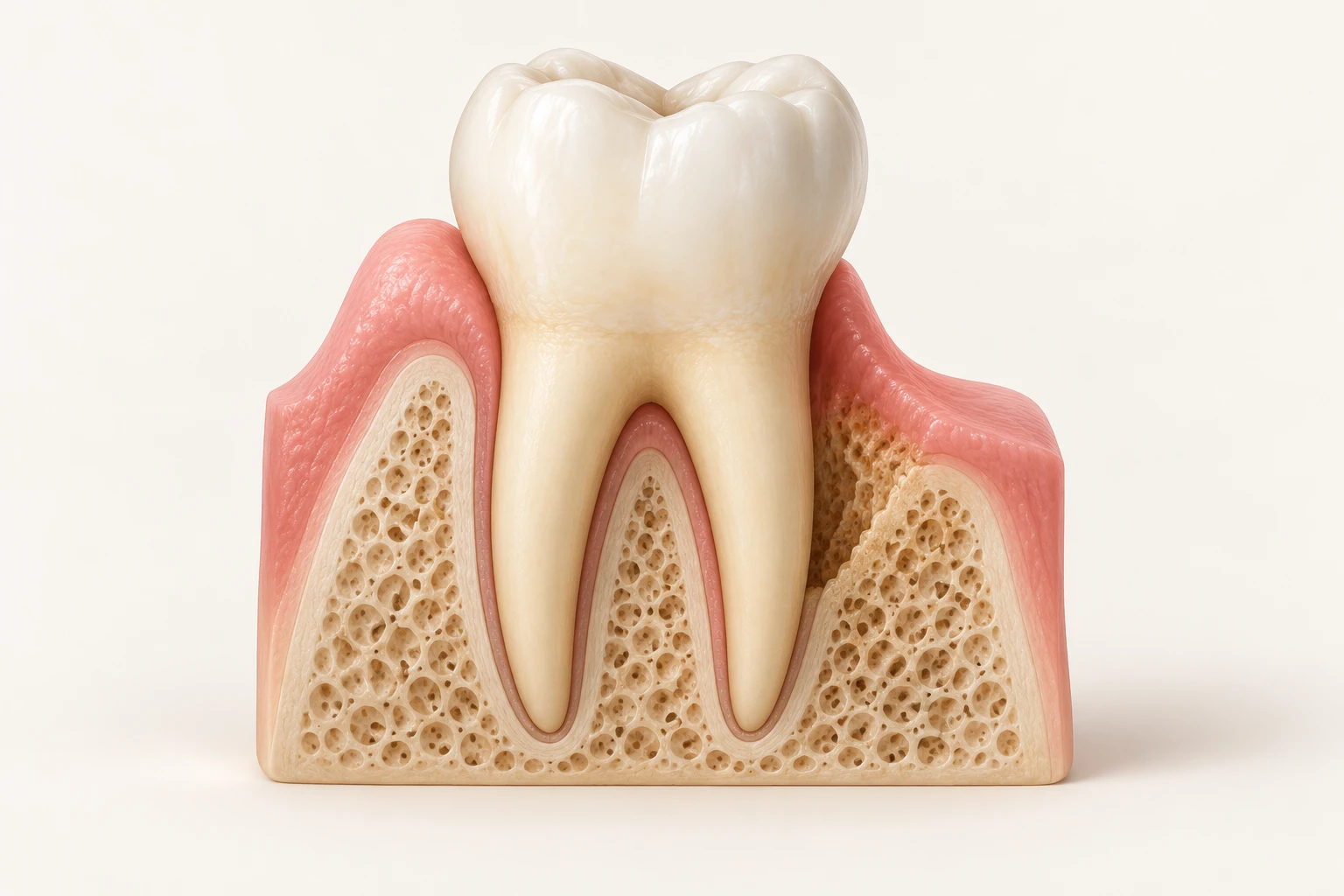
Periodontitis is an inflammatory disease that affects the tissues supporting the teeth, including bone. Loss of support may lead to loose teeth and, in advanced cases, tooth loss. Treatment aims to control the disease and preserve teeth whenever clinically possible.
Gingivitis affects the gums without loss of periodontal support. Periodontitis affects the supporting structures. Bleeding deserves investigation, but does not confirm the diagnosis on its own.
Some changes that warrant a consultation:
These signs may have other causes. A clinical assessment helps distinguish between them.
The consultation includes medical history, examination of the teeth and gums and, when indicated, radiographs. Periodontal probing measures the spaces between gums and teeth and helps identify loss of support.
Smoking, diabetes and hygiene habits are included in this analysis. The findings guide discussion of treatment options, the sequence of care and follow-up needs.
Oral hygiene guidance and control of risk factors, together with professional removal of plaque and calculus.
Instrumentation below the gumline to remove deposits from tooth surfaces and help control inflammation.
The tissue response guides the next steps. Persistent pockets may require additional treatment; surgery is considered in selected cases.
Follow-up visits to monitor periodontal stability and adjust care over time.
Periodontitis requires long-term follow-up. Daily hygiene and professional maintenance work together to reduce the risk of progression and recurrence.
The interval between follow-up visits is tailored to risk and tissue condition. Improvement in bleeding is important but does not replace periodontal reassessment.
The disease can be controlled. Support already lost is not automatically restored, and follow-up remains necessary.
No. Treatment starts with risk factor control and instrumentation. The need for surgery depends on the findings and response to initial treatment.
When periodontitis is present, areas below the gumline may need treatment and monitoring. The examination determines the extent of care.
The diagnosis does not mean all teeth will be lost. Prognosis depends on the condition of each tooth, the extent of disease and the response to care.
The sequence and number of visits are determined after assessment. Active treatment and maintenance have different goals and timelines.
Fernando Ramos is a specialist in periodontics, seeing patients in Asa Sul, Brasília. Periodontal care combines diagnosis, treatment and follow-up.
Discover Fernando Ramos’s backgroundFernando Ramos · CRO-DF 7532
Assis Chateaubriand Building · SRTVS 701, Block 2 · Suites 108–112
Asa Sul · Brasília – DF